How Much Snow Does Bend Oregon Get? A Local’s Guide to Winter
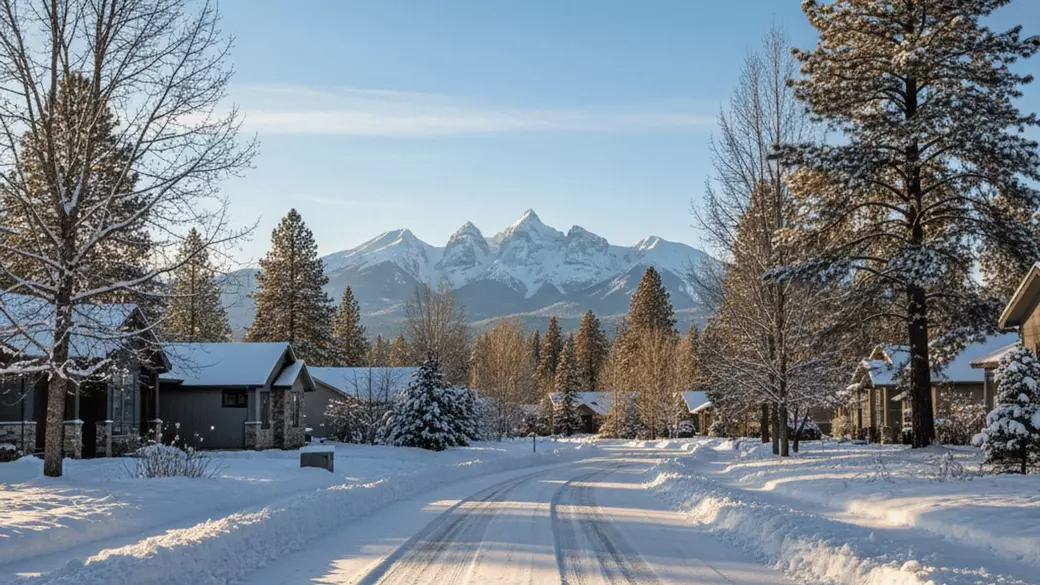
One of the first things people ask me when they start looking at homes here is, "Okay, be honest—is it going to be buried in snow all winter?" It’s a valid question. If you’ve seen photos of Mt. Bachelor with its massive snowpack, it’s easy to assume the town of Bend looks the same way from November to April.
The reality, however, is a lot more manageable. Bend sits in a "High Desert" climate. That means while we definitely get winter weather, we don’t get the gloom and constant gray drizzle that folks in the Willamette Valley deal with, nor do we get the buried-to-the-roof accumulation of the high alpine resorts.
If you are thinking about moving to Bend, here is exactly what you need to know about our snowfall, the driving conditions, and why winter here is actually one of the best times of year.
The Short Answer: Annual Snowfall Averages
If you look at the official stats, Bend typically averages between 20 and 33 inches of snow per year. That sounds like a fair amount if you are coming from California or Texas, but it rarely falls all at once.
The most important thing to understand about Bend weather is variability. Averages can be tricky because we have some winters where we barely see 15 inches total, and the ground stays bare for weeks at a time. Then we have outlier years—locals still talk about "Snowmageddon" in the winter of 2016-2017, when we saw nearly 60 inches and had snow banks taller than cars.
However, in a standard year, the pattern is usually a storm dropping a few inches, followed by sunshine that melts a good portion of it before the next system rolls in. It is rarely a solid block of ice from Thanksgiving to Easter.
- Average Annual Snowfall: ~24–33 inches (depending on where in town you measure).
- Record Years: 1992-93 saw nearly 90 inches; 2016-17 saw about 58 inches.
- Typical Pattern: Frequent light snows interspersed with melting periods.
Bend Oregon Snowfall by Month
If you are trying to plan your move or figure out when to buy those snow tires, it helps to know the timeline. Winter here doesn't just hit a switch; it ramps up and winds down.
December, January, and February are the heavy hitters. This is when you are most likely to wake up to a driveway that needs shoveling. By the time we get to the shoulder seasons—November and March—we usually just see dustings that melt by noon, though a freak storm isn't unheard of.
Here is how the accumulation usually shakes out:
- December: ~6–9 inches
- January: ~5–7 inches
- February: ~4–6 inches
Occasionally, we get a surprise dusting in October or late April, but those are generally "here today, gone tomorrow" events.
Town vs. Mountain: The Mt. Bachelor Difference
This is the biggest misconception for people relocating to Bend. There is a massive difference between the town of Bend and Mt. Bachelor, even though they are only about 22 miles apart.
Bend sits at an elevation of roughly 3,600 feet. Mt. Bachelor’s base is up around 6,300 feet. That elevation gap changes everything. While the ski resort is racking up an average of 460 inches of snow a season (making it a paradise for skiers and boarders), town might just be getting a light coating.
This is actually one of the biggest lifestyle perks of living here. You can drive 30 minutes to ski deep powder in the morning, and drive back down to clear roads and run errands in a light jacket in the afternoon. You generally don't have to live in the blizzard to enjoy the snow sports.
Temperature and Sunshine: The High Desert Context
30 inches of snow in Bend feels completely different than 30 inches of snow in the Midwest or the Northeast. Because we are a high desert, our air is dry. When it snows here, it is often light, fluffy "champagne powder" rather than the heavy, wet "Cascade Concrete" that falls closer to Portland. It is much easier to shovel and brush off your car.
We also get what locals call "Bluebird Days." These are days immediately following a storm where the sky turns a deep, crisp blue and the sun comes out in full force.
Even in the dead of winter, average highs usually hover between 40°F and 45°F. Nighttime lows drop into the 20s (or teens), which freezes everything solid overnight, but that strong high-desert sun helps clear the main roads quickly during the day. We get over 150 sunny days a year, and a good chunk of them happen right in the middle of winter.
Driving in Bend Winters: What You Need to Know
Driving is probably the biggest concern for newcomers. If you are relocating to Bend, you need to be prepared, but you don't need to be terrified.
First, Oregon law regarding traction tires and chains applies broadly from November 1 to April 1. In town, you generally do not need chains if you have a solid All-Wheel Drive (AWD) or 4WD vehicle with good all-season or winter tires. However, if you plan on driving over the mountain passes (like going to Portland or Eugene) or heading up to Mt. Bachelor, carrying chains is non-negotiable and often legally required.
The city handles the roads a bit differently than other places:
- Cinders, not Salt: To protect the local environment and our vehicles from rust, Bend uses crushed volcanic rock called "cinders" for traction. It works well, though it makes for a dusty spring cleanup.
- Plowing Priorities: The city focuses on major arterials and emergency routes first. If you live in a quiet cul-de-sac, don't expect a plow immediately after a storm. Most residents just drive over the packed snow until it melts.
Checking the ODOT TripCheck website before heading out becomes a daily habit for locals during storm cycles.
Microclimates: Does it Snow More in Certain Neighborhoods?
Bend isn't perfectly flat, and elevation changes within the city limits actually impact how much snow sticks.
The Westside of Bend is generally higher in elevation than the Eastside. Neighborhoods like Awbrey Butte or the areas closer to the forest boundary tend to get slightly more snow, and because they are often shaded by tall Ponderosa pines, the snow stays on the ground longer. If you are looking at Awbrey Butte homes, keep in mind that the streets are steep; having a capable winter vehicle is more important there than in flat areas.
Conversely, the Eastside and the Old Mill District sit lower. They often see faster melt-off. If you prefer less shoveling and flatter driveways, looking at Bend neighborhoods on the eastern side or central district might be a strategic move.
How Bend Compares to Nearby Towns
If you are casting a wider net and looking at the whole Central Oregon region, the snow load varies significantly just 15 or 20 minutes up the road.
- Redmond: Sitting at a slightly lower elevation north of town, Redmond typically gets less snow than Bend (averaging around 13–15 inches). It’s a good option if you want the high desert climate with less winter maintenance.
- Sisters: Located much closer to the Cascade range, Sisters gets significantly more snow and feels more like a mountain town in winter.
- Sunriver & La Pine: These areas are higher in elevation south of Bend. They often retain a snowpack on the ground for much of the winter. If you are buying here, you are signing up for a true winter lifestyle.
Frequently Asked Questions
Does Bend Oregon get a lot of snow?
Compared to major metro areas, yes, but compared to mountain towns, it is moderate. Bend averages about 24 to 30 inches a season, but the high desert sun often melts it between storms, so you rarely have massive accumulation piling up for months in town.
What is the snowiest month in Bend?
December is typically the snowiest month, averaging between 6 and 9 inches, followed closely by January. This is when the ski season at Mt. Bachelor really kicks into high gear and the town feels most wintry.
Do I need snow chains to drive in Bend?
For driving strictly around town, you usually do not need chains if you have AWD/4WD and quality traction tires. However, you should always carry them in your trunk, as they are often legally required when driving over the mountain passes or up to the ski resort.
Does it rain in Bend in the winter?
It can happen. Occasionally, a warm Pacific system will push through and bring rain instead of snow, even in January. However, snow is much more common during the winter months, while rain is more typical in the shoulder seasons of late fall and early spring.
Categories
Recent Posts