Winters in Bend Oregon: Local Adventures
Winters in Bend Oregon: Sun, Snow, and the High Desert Reality
If you tell someone from out of state that you’re moving to Oregon, they usually picture one thing: endless gray skies and drizzle. But if you are looking at living in Bend Oregon, you are looking at a completely different animal.
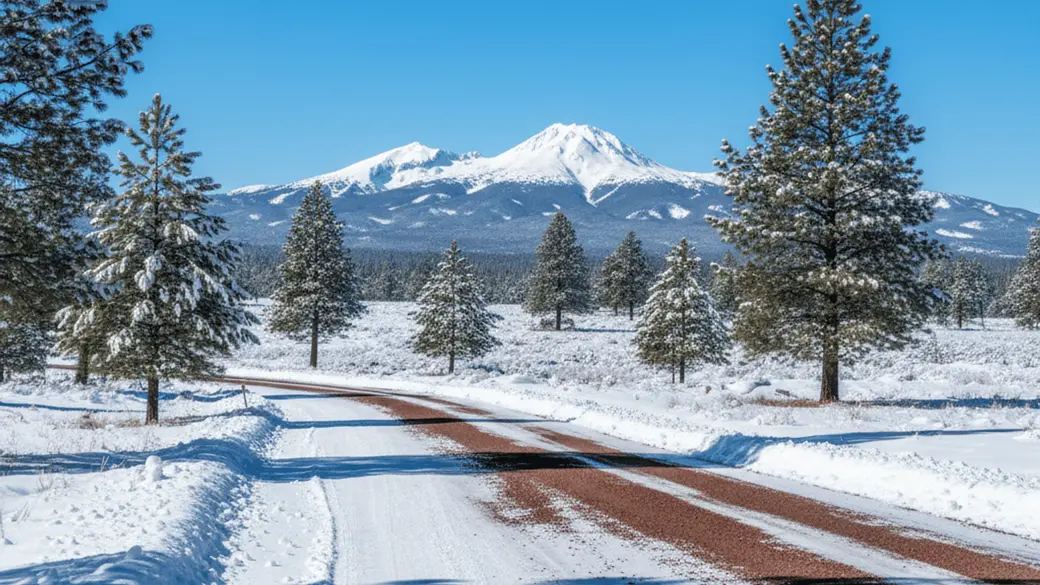
Here in the High Desert, winter isn't about gloom. It’s about contrast. You get significant snowfall, sure, but it’s often paired with brilliant blue skies and blinding sunshine. It’s what locals call a "bluebird day," and it’s the main reason people stick around when the temperature drops.
That said, the climate here is a dry cold. It’s not that bone-chilling humidity you might feel in the Midwest or the East Coast. It’s crisp. The local uniform shifts pretty hard in November—expect to see everyone in town sporting puffy down jackets, beanies, and boots, usually with a roof rack on their Subaru loaded with skis. It’s a distinct lifestyle, and while it’s beautiful, it comes with a few quirks you need to be ready for.
Bend Oregon Winter Weather: By the Numbers
Let's get the data out of the way so you know what to expect before you pack the U-Haul. A lot of people see photos of Mt. Bachelor buried in powder and assume the grocery store in town is also under ten feet of snow. That’s rarely the case.
Temperature Reality It gets cold, but often not as freezing as you'd fear during the day.
- Daytime Highs: usually hover in the low-to-mid 40s.
- Overnight Lows: drop into the 20s.
- The Extremes: We do get cold snaps where it drops into the single digits or even negatives, but those don't last all season.
The Sunshine Factor This is the game-changer. Bend gets over 150 sunny days a year, and a huge chunk of those happen in winter. The high-altitude sun is intense. Even if it’s 35 degrees out, that sun feels warm on your face, and more importantly, it melts the ice on the roads quickly.
Snowfall: Town vs. Mountain There is a massive difference between your driveway and the ski lodge. The town of Bend typically sees about 20 to 30 inches of snow throughout the entire season. Meanwhile, just 20 minutes up the road, Mt. Bachelor is getting hammered with 370+ inches.
You’ll also experience the "inversion" effect here. On some winter days, it’s actually foggy and colder in town, while the mountain is sunny and warmer. It’s a weird phenomenon, but it makes for a great excuse to skip work and head up the hill.
Winter Driving and Road Conditions
If there is one thing that stresses out newcomers, it’s the roads. Driving in Bend winter weather requires a bit of an adjustment, specifically regarding how the city handles snow removal.
The "Cinders" vs. Salt Bend does not use heavy road salt like they do back east. Salt is terrible for the local environment and the Deschutes River. Instead, the city uses magnesium chloride and "cinders." Cinders are crushed red volcanic rock.
The good news? Your car won't rust out in three years. The bad news? Your car will be constantly covered in a fine red dust, and your floor mats will take a beating.
Plowing Priorities The city generally does not plow roads down to bare pavement. They leave a packed snow layer to protect the road surface. This means you are often driving on hard-packed snow or ice, not asphalt. Major arterials get plowed first; if you live in a quiet cul-de-sac, you might wait a while to see a plow.
The Roundabout Challenge Bend is famous for its roundabouts. They keep traffic moving great in the summer, but in the winter, they can be slick. The centrifugal force can send rear-wheel-drive cars sliding if you take them too fast. The rule of thumb? Slow down way before you enter the circle.
Vehicle Prep If you are moving to Bend, you don’t strictly need a giant truck, but All-Wheel Drive (AWD) or 4WD is the standard for a reason. Locals highly recommend winter tires—either studless winter traction tires or studded tires. If you try to survive on generic all-seasons, you will likely slide around more than you’d like.
Outdoor Recreation: Embracing the Snow
The reason most people tolerate the icy roads is the access to world-class play. You are basically living in a giant playground.
Alpine Skiing and Snowboarding Mt. Bachelor is the giant in the room. It’s usually about a 20 to 30-minute drive from the Westside of Bend. Since it’s a volcano, you can ski off the summit in almost 360 degrees. It’s big, wind-protected in the trees, and has a season that often lasts into May.
Sno-Parks and Nordic Skiing If downhill isn't your thing, the Sno-Parks off Century Drive are incredible.
- Virginia Meissner Sno-Park: This is the go-to for groomed Nordic (cross-country) skiing trails. It’s community-supported and pristine.
- Wanoga Sno-Park: A local favorite because it’s a bit more rowdy. You’ll find fat-tire bikers, sledding hills, and dog-friendly ski trails here.
In-Town Fun You don’t have to drive up to the mountains to enjoy the cold. The Pavilion in town converts to an ice rink in the winter for skating, hockey, and curling leagues. Or, you can just grab a pair of snowshoes and walk along the Deschutes River Trail right in the middle of town.
Après-Ski and Indoor Life
When the lifts close, the town shifts into "cozy" mode. There is a strong culture of Hygge here—that Danish concept of comfort and conviviality.
The Brewery Scene The "Bend Ale Trail" changes character in winter. The light IPAs take a backseat to dark porters, stouts, and barrel-aged ales. Sitting by a fire pit at a brewery like Crux or 10 Barrel with a dark beer while snow falls outside is a peak Bend experience.
Local Events February brings the Oregon WinterFest to the Old Mill District. It’s a massive festival with ice carving, fire pits, live music, and light art installations. It’s a great way to break up the cabin fever that can set in late in the season.
Café Culture Since so many people work remotely here, the coffee shops are buzzing all winter. It’s socially acceptable to camp out with a laptop for a few hours, provided you keep buying coffee and scones.
Practical Tips for Living in Bend During Winter
If you are looking at homes, you need to think about maintenance. The cost of living in Bend isn't just the mortgage; it's also keeping the house running when it's 20 degrees out.
Managing Ice Dams Because we get sunny days followed by freezing nights, snow on your roof melts and refreezes at the gutters, forming ice dams. These can push water back under your shingles and cause leaks. Many locals install heat cables in their gutters or use roof rakes to pull snow off the eaves.
Heating Costs Heating bills can surprise you. Natural gas is generally cheaper, but many older homes rely on electric baseboards or heat pumps that struggle when temps drop into the single digits. It’s worth asking about the average utility bills before you buy.
The "Berm" Struggle When the city plow finally comes down your street, they will push a wall of snow across the bottom of your driveway. It’s unavoidable. Locals know the struggle of shoveling out the "berm" before it freezes into a solid block of ice overnight.
Bend vs. The Valley: Comparing Oregon Winters
For those trying to decide between Bend and the Willamette Valley (Portland, Eugene, Salem), the winter experience is the biggest differentiator.
In the Valley, winter means rain. Days upon weeks of gray, drizzly skies, with temperatures in the 40s. Everything stays green, but you might not see the sun for a stretch.
In Bend and the High Desert, winter means snow and crisp air. The landscape turns white, but the sky is often blue. Many people move to Bend specifically to escape the Seasonal Affective Disorder (SAD) that hits hard in the rainy part of the state. You trade the umbrella for a snow shovel, but you gain the sunshine.
Pros and Cons of Winter in Bend
Here is the quick rundown if you are trying to weigh your options:
Pros
- Beauty: The snow-capped Cascades against a blue sky are unbeatable.
- Recreation: You can ski in the morning and golf in the afternoon on certain spring days.
- Dryness: No humidity, no bone-soaking dampness.
- Sunshine: Truly helps with winter mood.
Cons
- Driving: Roundabouts on ice can be scary, and the red cinder dust gets everywhere.
- Shoveling: If you have a long driveway, you will get a workout.
- Crowds: Holidays bring tourists, making the drive to the mountain slower.
- Heating: Older, poorly insulated homes can be expensive to keep warm.
Frequently Asked Questions
Does it rain in Bend Oregon in the winter?
Occasionally, but it is rare compared to the rest of Oregon. Because of the high altitude, precipitation usually falls as snow. However, in the "shoulder seasons" or during warm fronts, we can get a mix of rain and slush, which usually turns to ice overnight.
Do I need chains to drive in Bend?
You are legally required to carry tire chains in your vehicle when driving over the mountain passes (like Santiam or Willamette Pass) during winter. In town, you rarely need to put them on if you have AWD and good winter tires, but having them in the trunk is a mandatory safety net.
How long does winter last in Bend?
Winter is long here. We typically start seeing snow sticking in November, and it can stay on the ground through March. It's not uncommon to get a freak snowstorm in April or even May, known as "Junuary," though those late storms melt off very fast.
Categories
Recent Posts