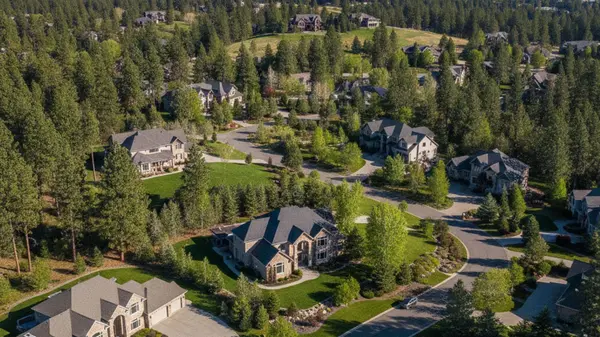
Current Trends in the Bend, OR Housing Market for 2026
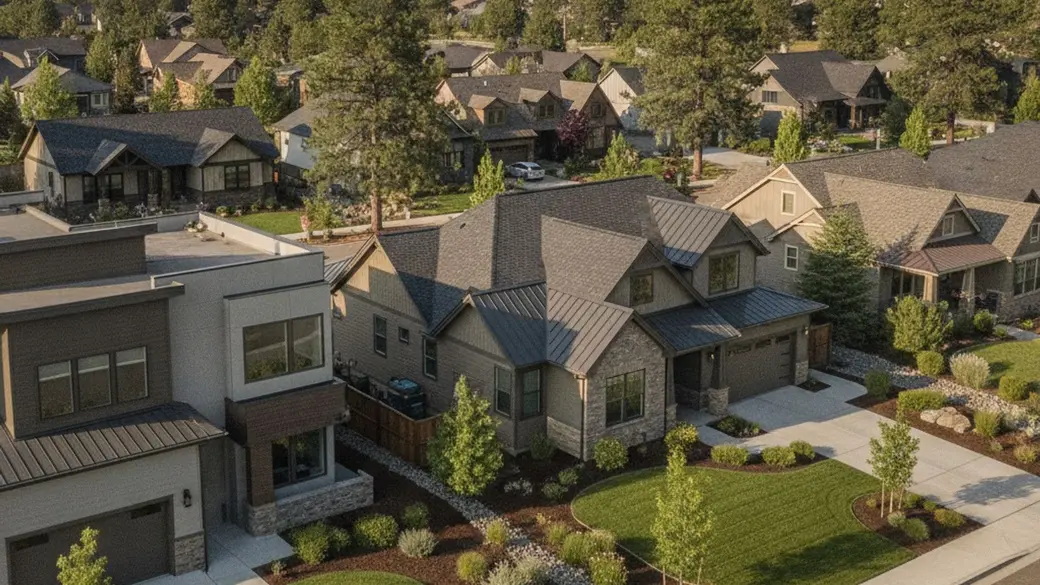
The median sale price for a home in Bend sits at around $778,000 as of mid-2026. Any current Bend Oregon real estate guide will show that if you're buying in Deschutes County right now, you're looking at limited inventory, fast sales, and a negotiating environment that generally favors sellers.
The Cascades East Association of REALTORS® tracks ongoing demand across Central Oregon. Whether you're selling near the Deschutes River or trying to land a primary residence, knowing what the data actually says will save you from setting the wrong expectations.
Overview of the Bend Real Estate Market
Active inventory stands at roughly 609 homes for sale, which works out to about 3.4 months of supply. A balanced market needs five to six months. Bend isn't there.
With 180 homes sold in a single month and a sale-to-list ratio of 99.2%, sellers are holding most of the cards in most transactions.
Buyer and Seller Dynamics
Redfin scores Bend a 72 out of 100 for competitiveness - that's not a theoretical seller's market, it's a practical one. Multiple offers on well-priced properties aren't unusual. About 21.1% of recent sales closed above the asking price, so buyers who show up with a soft offer and a list of requests often lose.
Prepare a strong offer. Expect minimal concessions on move-in ready homes.
Regional Comparisons in Central Oregon
Bend tends to command higher prices than neighboring towns in Deschutes County, and buyers who get priced out of the city limits often expand their search to surrounding communities. The Cascades East Association of REALTORS® covers nine counties, which gives you a sense of how far that demand radiates. When Bend's active listings tighten, nearby areas feel it too.
Home Prices in Bend, OR
The median sale price hit $778,000 in late spring 2026 - a 5.7% year-over-year increase. That's not a fluke; it reflects sustained upward pressure that's been building for a while now.
The average price tells a slightly different story, hovering around $717,000. When median and average diverge like that, it usually means a handful of high-end or low-end sales are pulling the broader number in one direction. Neither figure alone gives you the full picture.
Price Per Square Foot
Plan on paying around $387 per square foot, which is up 1.7% from last year. It's a modest increase, but it matters when you're comparing a smaller updated home to a larger one that needs work - the renovated property will almost always carry a higher per-square-foot cost even if the total price looks similar.
Neighborhood and ZIP Code Values
Prices move around considerably depending on where you're looking. The 97702 ZIP code, covering the southern part of the city, sees consistent demand partly because of its proximity to the Old Mill District and local parks. Each neighborhood has its own pricing tier.
Don't rely on the citywide median to evaluate a specific property. Pull the comparable sales for that subdivision and go from there.
Recent Sales Trends and Inventory
The median days on market is 21. That's not a lot of time to schedule a tour, run the numbers, and put together a competitive offer - so if you're not ready to move quickly, you'll watch deals slip by.
Total active listings sit at around 609 properties, and with 3.4 months of supply, competition stays tight across most price brackets.
Days on Market and Listing Volume
Twenty-one days is meaningfully faster than the 33 days recorded during the same period last year. Buyers aren't sitting on their hands. When a desirable home hits the MLS, qualified buyers are acting, and sellers of well-maintained homes priced at market value are seeing strong open house turnout.
Listing volume fluctuates seasonally, but inventory remains below historical norms regardless of the time of year. That's the backdrop for every transaction right now.
Price Reductions and Market Shifts
Not every seller walks away with their asking price. Properties that sit past three weeks frequently need a price adjustment to get things moving again - and that pattern hasn't changed despite the 5.7% year-over-year median increase.
Overpricing is still one of the most common seller mistakes. Testing the market with an inflated number usually ends with a price drop anyway, plus a longer days-on-market count that makes buyers wonder what's wrong with the house.
Market Forecast and Predictions
With 3.4 months of supply and no sign of a sudden inventory surge, a sharp drop in property values looks unlikely through the end of 2026. The more probable outcome is continued price stability, maybe modest appreciation, depending on where interest rates and local employment land.
Most local analysts aren't forecasting dramatic spikes - they're forecasting a normalizing market. That's actually useful information if you're trying to plan.
Future Pricing Expectations
The 5.7% year-over-year growth trend supports steady appreciation rather than a correction. Buyers waiting for a major price drop may be waiting through further gains if inventory stays constrained. New construction is adding units, but not at a volume that meaningfully shifts the supply-and-demand equation - particularly for single-family homes.
Timing Your Purchase
Here's the honest answer on timing: personal financial readiness matters more than market timing. Homes are selling in three weeks, so if you're qualified and prepared, you have a real advantage. If you're waiting for interest rates to fall while prices keep climbing, the math may not work out the way you're hoping.
Base your decision on your current budget and your long-term housing needs. That's it.
Cost of Living and Affordability
The median household income in Bend grew to $96,394 in 2024, according to recent Census Bureau data. That's meaningful wage growth and reflects genuine economic shifts in the region.
Buyers need substantial down payments to keep monthly mortgage obligations at a manageable level, and that's before you factor in property taxes and insurance.
Income Requirements
Purchasing near the $778,000 median requires a household income well above what most Bend residents earn. Lenders are going to look at your debt-to-income ratio carefully - the mortgage payment alone is one thing, but they're also accounting for taxes and insurance. First-time buyers frequently look at local and state assistance programs to help close that gap. Talk to a mortgage broker early so you know exactly where you stand before you start touring homes.
Local Income Benchmarks
Median household income jumped from $88,792 in 2023 to $96,394 in 2024 - that's real progress. But housing costs have historically outpaced income gains, and that pattern hasn't reversed. Build your budget around the full monthly picture: utilities, transportation, and property taxes, not just the mortgage payment. The buyers who end up house-poor are usually the ones who stopped calculating after the down payment.
Buying and Selling Practicalities
With 21.1% of homes selling above list price, buyers need a clear plan before they make an offer - not during the offer. Sellers, on the other side, need their properties to actually justify top-tier pricing, because buyers who've lost a few bidding wars tend to scrutinize value carefully.
Understanding local norms around timelines and negotiation tactics helps both sides avoid costly surprises.
The 3-3-3 Rule for Buyers
Some buyers use the 3-3-3 rule to structure their search: identify three specific neighborhoods, view three homes per week, and commit three months to the process. It's a framework designed to prevent the kind of burnout that leads to bad decisions in a fast-moving market. Keeping your focus tight means you don't end up chasing every listing that comes through and losing sight of what you actually need.
Working With a Local Agent
An agent who knows Deschutes County can tell you which areas are seeing multiple offers and which subdivisions have listings sitting. That's the kind of granular read that citywide data can't give you.
For sellers, the message is simple: price based on recent comparable sales, not what you wish the house was worth. Accurate pricing on day one consistently outperforms the "test the market" approach.
Searching for Properties
The 609 active listings in Bend cover a range of property types - downtown condos, single-family homes, larger properties further from the city center. Options exist, but you have to be ready to act when something that fits your criteria shows up.
Filtering MLS data by square footage, lot size, and proximity to commuter routes gets you to the relevant inventory faster and keeps you from wasting time on properties that don't fit.
Single-Family Homes Versus Condos
Single-family homes make up the bulk of local inventory and carry the highest prices - driven largely by the privacy and outdoor space they offer. Condos come in at a lower entry point for buyers who can't reach the $778,000 median single-family price, but factor in the homeowner association fees before you decide the math works. Those monthly costs add up.
Rental Market Alternatives
Some prospective buyers choose to rent while they get a feel for the area or wait for more inventory to come online. Renting gives you time to test different neighborhoods before committing, and it's a reasonable fallback if your search is taking longer than expected. There's no shame in it - buying the wrong house in the wrong neighborhood is a more expensive mistake than another year of renting.
Common Questions About the Bend Market
How much income do I need to qualify for a median-priced home in Bend right now?
It depends on your down payment and current interest rates. With the median home price at $778,000, buyers typically need a household income well above the local $96,394 median to keep their debt-to-income ratio within lender limits.
How fast are homes selling in Bend, and do I still need to waive contingencies to compete?
Homes are spending a median of 21 days on the market. The market is competitive - 21.1% of homes are selling above list price - but talk to your agent before waiving inspection or financing contingencies. That decision carries real financial risk and isn't right for every situation.
Are cash buyers from out of state still driving up the Bend real estate market?
Are cash buyers from out of state still driving up the Bend real estate market? Cash buyers are active in the market, though their impact fluctuates. The more consistent pressure comes from the fundamentals: 609 active listings and 3.4 months of supply are what's keeping prices elevated and competition tight.
Is it significantly more affordable to buy a house in Redmond or Sisters instead of Bend?
Yes. Buyers regularly find lower median prices in neighboring Deschutes County communities. Expanding your search when Bend's inventory is tight and prices are rising is a common and often practical strategy.
How are wildfire risk zones and new mapping impacting home insurance rates for Bend buyers?
Insurance rates and risk mapping affect total monthly costs for properties across Deschutes County. Request insurance quotes during your inspection period - you need to know what the premiums look like alongside a $778,000 median purchase price before you close.
Is winter a good time to negotiate a home purchase in Bend, or should I wait for spring inventory?
Winter typically brings fewer active listings and less buyer competition. Sellers who list during the colder months are usually motivated, which can give buyers more room to negotiate on price. Whether that trade-off is worth fewer choices depends on your situation.
Categories
Recent Posts