What to Know About the Bend, OR Population and Housing Market in 2026
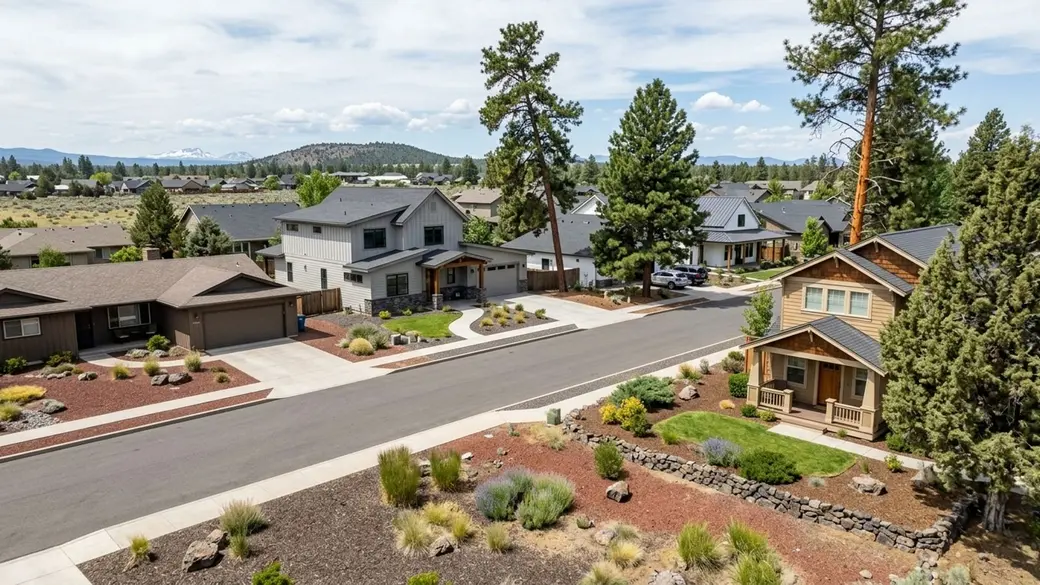
Bend, Oregon has gone from a quiet logging town to a major regional hub in roughly two decades. That shift didn't happen quietly - the Cascade Lakes, the trails, the outdoor access in general pulled people here steadily, and the housing market absorbed every wave of them. If you're buying here and comparing different Bend, OR zip codes, the first thing to understand is that population growth isn't just a demographic footnote. It's the direct reason inventory feels tight and prices hold where they do.
Bend's population size, settlement trends, and new construction pipeline give you a real advantage going into a home search. So let's get into it.
The Current Size of the Bend Community
As of July 2025, U.S. Census Bureau data placed the city's population at roughly 107,342, which makes Bend the sixth-largest city in Oregon and the dominant population center for Deschutes County. Portland State University came in with a slightly lower estimate of 107,079 for the same period. Either way, the city has crossed the 100,000-resident mark and isn't going back. For buyers, that threshold matters - it means you're looking at a mid-sized metro with real amenities, not a small rural town that happens to have good skiing nearby.
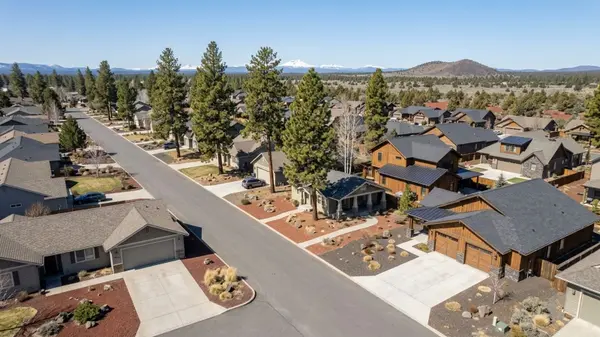
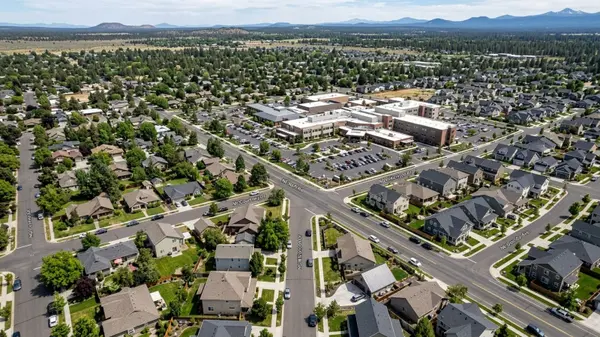
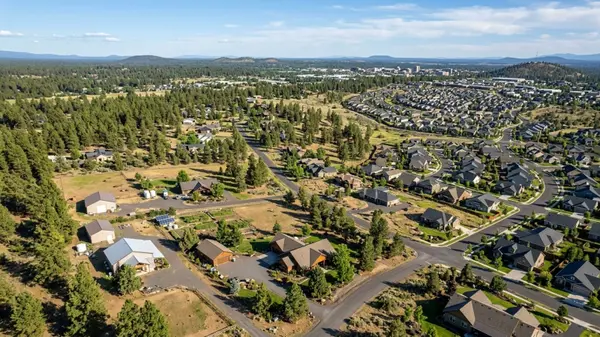
Density varies a lot depending on where you are inside the city limits. Near the urban core and the Old Mill District, you'll find tighter lots and more multi-family housing. Push out toward the Urban Growth Boundary and it opens up into a broader suburban pattern.
A Decade of Rapid Expansion
Between April 2010 and July 2019, Bend's population grew by about 31%, reaching 100,421 residents. That kind of growth chews through housing inventory fast, and it permanently reshaped the local real estate landscape. If you knew this area in the early 2010s, you're looking at a fundamentally different city now.
The pace has since come down to earth. From 2020 to 2025, the overall increase was about 8%, and the year-over-year gain from 2024 to 2025 was just 1.46%. That's a meaningful shift - from boom-era growth to something steadier and more predictable.
How Resident Numbers Shape the Housing Market
The median sale price for a home in Bend is currently around $700,000. There are roughly 617 active listings on the market, and the city's ongoing population growth keeps pressure on that inventory. The market is sitting at about 3.2 months of supply, homes are averaging around 42 days before going under contract, and they're closing at just under 99% of list price.
That's not a frenzy, but it's not soft either.
For sellers, steady demand means well-priced homes still draw serious buyers. For buyers, the slower population growth does ease things compared to the bidding wars that defined a few years back - but you still need to move with some conviction when you find the right property.
New Residential Construction Projects
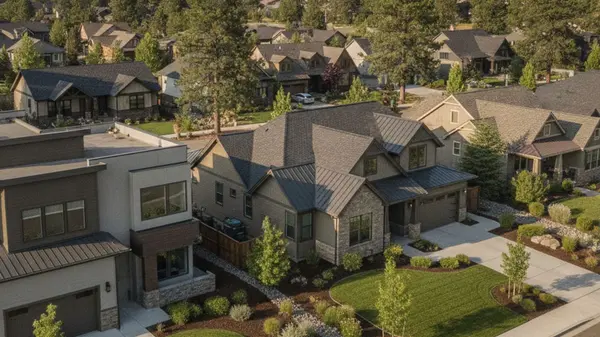
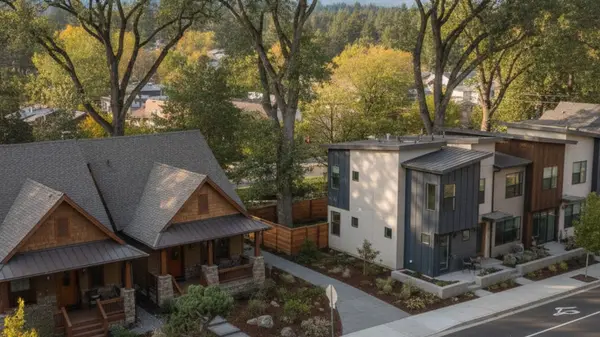
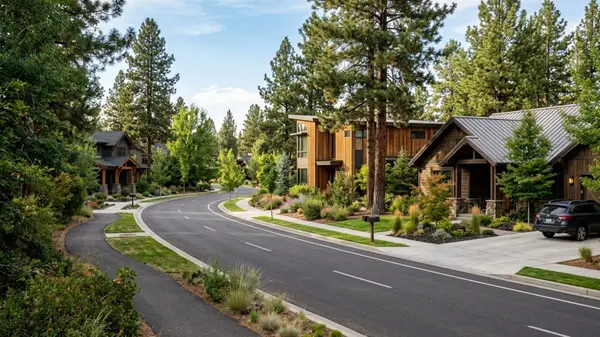
Builders are responding to the demand, mostly by pushing toward the city's edges. The Ponderosa Master Plan, approved in March 2025, is adding 371 new homes to a 42-acre site in the southwest. That project includes single-family homes, townhomes, and the Cascade Landing component - 194 income-restricted units expected to hit the market by 2027.
On the southeast side, Pahlisch Homes proposed the Union Master Plan in September 2025. That's a 45-acre site planned for 164 single-family houses, 64 townhomes, and 138 multifamily units. There's also a six-story, 300-plus unit apartment complex working through city approvals near SW Century Drive on the western edge of town.
City Layout and Commute Times
The Deschutes River splits Bend into Westside and Eastside districts, and that divide shapes daily life more than most buyers initially expect. It affects your commute, your proximity to trails, your price point - and ultimately, which part of town fits your life.
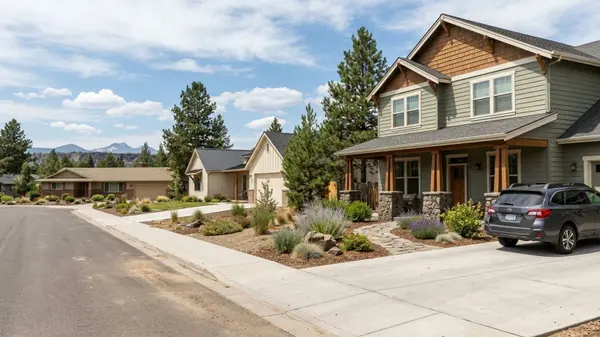
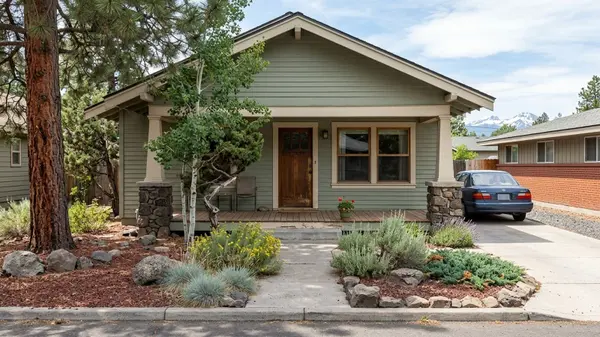
The Westside tends to feature older neighborhoods, easy trail access, and proximity to the revitalized Old Mill District. The Eastside leans toward newer suburban development with slightly larger lots. Both sides are worth exploring, because the price points and the feel are genuinely different. Don't assume one is better without walking both.
As the city fills in toward its Urban Growth Boundary, regional commuting has become a real consideration. US-97 is the main artery connecting Bend to the rest of Deschutes County, and where you buy relative to that corridor matters.
Driving to Redmond and Beyond
Redmond is about 17 miles north via US-97. Under normal conditions, that drive runs 22 to 26 minutes, though depending on the time of day you could see anywhere from 15 to 30 minutes. Seasonal recreation traffic - summer and winter both - can slow things down along this corridor. If you're planning to commute regularly between Bend and Redmond, do yourself a favor and test the drive during actual rush hours before you commit to a neighborhood.
Frequently Asked Questions
Is the population of Bend growing?
Yes, but the recent shift away from boom-era expansion offers a practical benefit for house hunters. Buyers now have slightly more time to evaluate properties without facing the intense bidding wars that defined the early 2020s.
How does the population size affect the Bend housing market?
The steady influx of residents ensures that well-priced homes continue to attract serious offers. While the overall market frenzy has cooled, act decisively when you find a property that fits your criteria.
Is there enough new housing construction in Bend to keep up with the population influx?
Developers are actively expanding the city's footprint to meet residential demand, particularly near the edges of the Urban Growth Boundary. Buyers looking for new builds will find the majority of these opportunities concentrated in the southwest and southeast corridors.
Which neighborhoods in Bend are seeing the most population growth?
The most significant expansion is happening near the Urban Growth Boundary, where developers have the acreage to build master-planned communities. These border areas offer the highest concentration of incoming single-family homes and income-restricted units.
How is Bend's city layout and infrastructure handling the recent population boom?
The city relies heavily on the US-97 corridor to manage regional traffic, which requires buyers to carefully weigh their daily commute against their chosen neighborhood. Test your expected drive times during peak summer and winter recreation seasons before committing to a location.
Categories
Recent Posts