From 'Farewell Bend' to Central Oregon's Crown Jewel
When you look around Bend today, you see a landscape defined by world-class skiing, craft breweries, and river surfing. But if you peel back the layers of Gore-Tex and IPA taps, you’ll find a town built on grit, sawdust, and serious determination.
For anyone looking at homes for sale in Bend, understanding the history here adds a layer of appreciation to the neighborhoods. The city didn't start as a resort destination; it began as a rugged crossing point. Early pioneers on their way west referred to this area as "Farewell Bend." It was one of the few places where the Deschutes River could be easily forded before travelers had to face the dry, grueling trek across the high desert.
So, how did we lose the "Farewell"? It came down to the bureaucracy of the U.S. Postal Service. When the town sought a post office in 1886, the USPS rejected the name "Farewell Bend" because it was already taken by another town in Oregon. They decided to chop it short, and "Bend" was officially born. Since its incorporation in 1905, the city has transformed from a remote outpost to a timber powerhouse, and finally, to the outdoor mecca we know today.
The First Inhabitants: Indigenous History of the High Desert
Long before the pioneers arrived or the first log was floated down the river, this land was the home of the Wana Lama (Warm Springs), Wasco, and Northern Paiute people. For thousands of years, these tribes utilized the Deschutes River basin for fishing, hunting, and gathering, living in rhythm with the high desert seasons.
The river provided an abundance of salmon, while the surrounding lands offered roots and game. However, the arrival of settlers drastically altered this way of life. The Treaty of 1855 forced the cession of millions of acres of land to the United States government, moving the tribes to the Warm Springs Reservation north of Bend.
Today, the influence and culture of the Confederated Tribes of Warm Springs remain deeply woven into the fabric of Central Oregon. From the management of natural resources to cultural exhibits at local museums, the heritage of the region's original stewards is a vital part of the story.
The Railroad War: Hill vs. Harriman
If you think modern bidding wars on real estate are intense, they pale in comparison to the "Railroad War" of the early 1900s. This was a literal race to open up Central Oregon to the rest of the country, led by two rival titans of industry: James J. Hill of the Oregon Trunk Line and E.H. Harriman of the Deschutes Railroad.
Between 1909 and 1911, these two factions built parallel tracks on opposite sides of the Deschutes River canyon, racing south from the Columbia River to reach Bend. It wasn't a friendly competition; crews allegedly sabotaged each other with dynamite, and the tension was palpable.
James J. Hill eventually won the race, driving the ceremonial "Golden Spike" in Bend in 1911. The arrival of the train changed everything. It connected the isolated high desert to global markets, turning a small settlement into a boomtown almost overnight and paving the way for the timber industry to take hold.
The Timber Years: Brooks-Scanlon and Shevlin-Hixon
Once the rails were laid, the timber giants moved in. Just like the railroads, the lumber industry in Bend was defined by two massive, rival companies: Brooks-Scanlon and Shevlin-Hixon.
These companies set up enormous milling operations on opposite banks of the Deschutes River, dominating the local economy for decades. For a long time, if you lived in Bend, you likely worked at one of the mills or for a business that supported them. At its height, Bend was one of the largest timber producers in the world, churning out pine lumber that built homes across America.
The era of massive production couldn't last forever. By the 1980s, changing federal regulations and dwindling timber supplies led to the decline of the industry. The mills closed, leaving the town at an economic crossroads. It was a difficult transition, but it forced Bend to pivot toward tourism, recreation, and the lifestyle economy that drives the real estate market today.
Adaptive Reuse: The Transformation of the Old Mill District
One of the best examples of Bend's ability to reinvent itself is the Old Mill District. When the Brooks-Scanlon mill finally ceased operations, it left behind a massive, industrial brownfield along the river. In many cities, this might have become a fenced-off wasteland, but Bend saw potential.
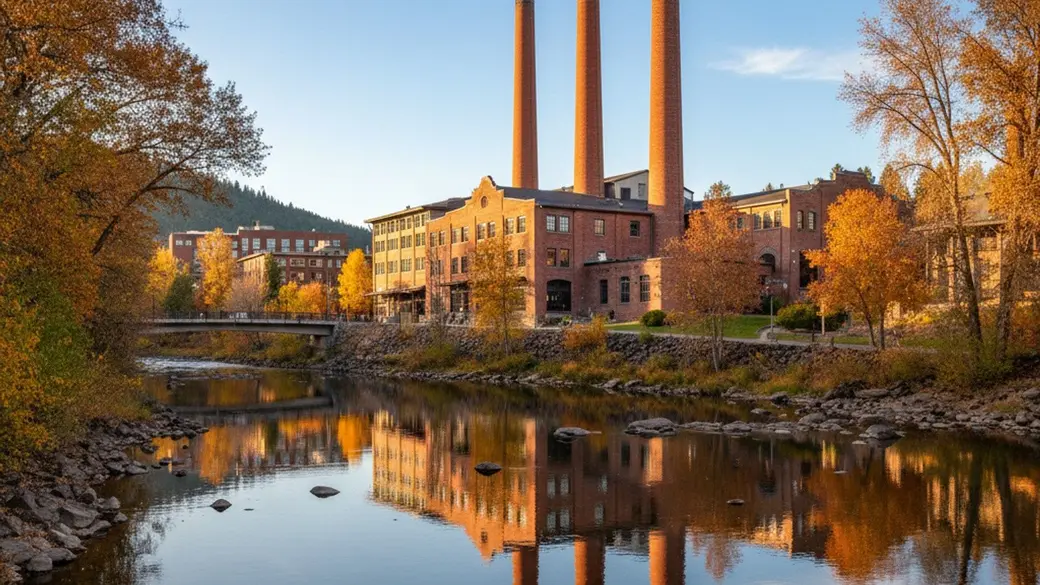
Developers and city planners envisioned a new life for the property, transforming it into a premier mixed-use area. Today, the Old Mill District is a hub for shopping, dining, and entertainment. The most striking feature, however, is the preservation of history. The three towering smokestacks from the original powerhouse were saved and remain the district’s most iconic landmark.
For those interested in living in Old Mill District, the area now features luxury condos and townhomes that sit right where the lumber yards used to be. It’s a perfect blend of past and present, offering riverfront trails and concerts at the Hayden Homes Amphitheater on the same soil that once drove the city’s industrial engine.
Preserving the Past: Museums and Historic Sites
If you want to get a hands-on feel for the local history, you don't have to look far. The city has done an excellent job of preserving its roots, and there are several spots where you can step back in time.
-
Deschutes Historical Museum: Located in the historic Reid School building, which was built in 1914. The building itself is an artifact, having served as Bend’s first modern schoolhouse. Inside, you’ll find exhibits covering everything from the indigenous history to the logging era.
-
High Desert Museum: While just outside of town, this is a must-visit for a broader look at the natural and cultural history of the entire region, including live wildlife and living history exhibits.
-
Downtown Heritage Walk: Simply walking through downtown Bend offers a history lesson. Many of the brick buildings housing your favorite coffee shops and boutiques date back to the early 20th-century boom following the railroad's arrival.
Legends, Myths, and Fun Facts
Every town has its myths, and Bend is no exception. Here are a few clarifications on local lore and some fun facts to share at your next dinner party.
-
Amelia Earhart: You might hear rumors that the famous aviator lived in Bend. That is technically a myth. Her husband, George Palmer Putnam, was a prominent Bend resident (and mayor) before they were married. Amelia visited, but she never officially called Bend home.
-
The Last Blockbuster: In a digital world, Bend holds a unique analog title. It is home to the last remaining Blockbuster video store in the world. It has become a nostalgic tourist attraction in its own right.
-
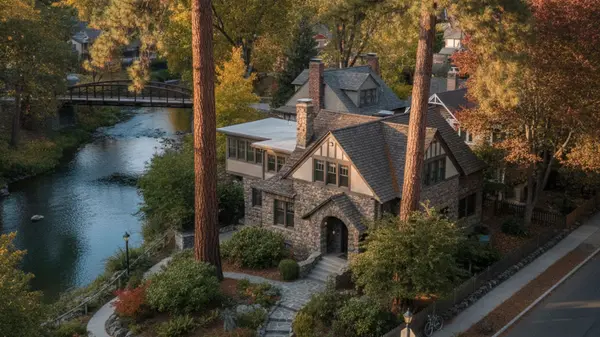
Mirror Pond: The iconic, glass-like section of the river in Drake Park isn't entirely natural. Mirror Pond was created in 1910 by the construction of a dam to generate electricity for the growing city.
How History Shapes Modern Bend Living
So, why does all this history matter to someone looking at homes for sale in Bend today? Because the past has directly shaped the layout, character, and vibe of the city.
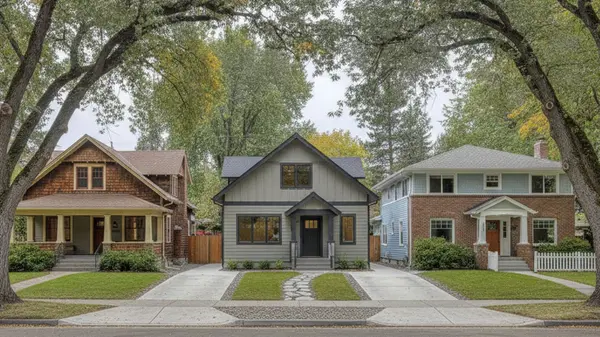
The "Old Bend" neighborhoods near downtown are highly sought after precisely because of their historic charm—craftsman bungalows and mature trees that date back to the mill boom. The logging roads that were once used to haul timber have been reclaimed as the foundations for the mountain bike trails and fire roads that draw outdoor enthusiasts from around the globe.
Even the spirit of "Farewell Bend"—a place to rest, gather, and refresh—lives on in the city's hospitality culture. Whether you are settling into a historic cottage or a new build near the river, you are buying into a story of resilience and reinvention.
Frequently Asked Questions
How did Bend, Oregon get its name?
The name is a shortened version of "Farewell Bend," which was the name pioneers used for the location where they could ford the Deschutes River. When the town applied for a post office in 1886, the USPS shortened it to "Bend" because "Farewell Bend" was already in use by another town.
What is the historical significance of the Old Mill District?
The Old Mill District was the site of the Brooks-Scanlon lumber mill, which was one of the largest timber operations in the world and the economic engine of the city for decades. Today, it has been transformed into a shopping and lifestyle district, but it retains the original smokestacks as a tribute to its industrial past.
Did Amelia Earhart live in Bend, Oregon?
No, Amelia Earhart did not live in Bend. However, her husband, George Palmer Putnam, was a very influential resident who served as the mayor of Bend and published the local newspaper before they were married.
Where is the Bend history museum located?
The Deschutes Historical Museum is located at 129 NW Idaho Avenue, between downtown and the Old Mill District. It is housed in the historic Reid School building, which was constructed in 1914.
Why are there three smokestacks in the Old Mill District?
The three smokestacks are the preserved remnants of the powerhouse that fueled the Brooks-Scanlon lumber mill. They were saved from demolition during the area's redevelopment to serve as a historic landmark and a reminder of the city's timber heritage.
Categories
Recent Posts