The Road Not Taken: Reflections for Everyday Living
The Road Not Taken: Why the "Right" Choice in Real Estate (and Life) Is a Myth
The Most Misunderstood Poem in History
If you have ever attended a high school graduation or thumbed through an inspirational quote book, you have seen it. It is arguably the most famous ending in American poetry:
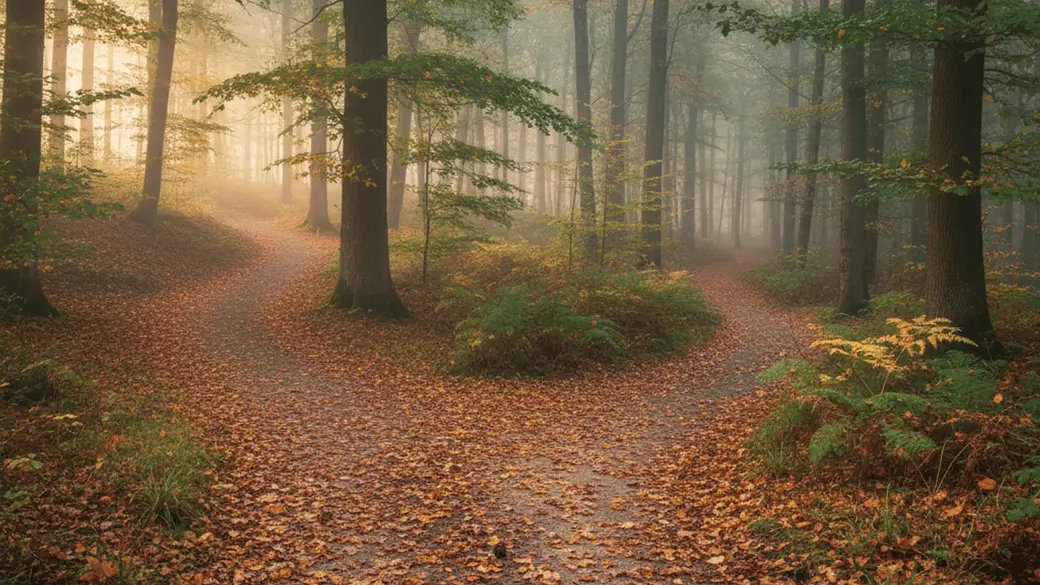
"Two roads diverged in a wood, and I - I took the one less traveled by, And that has made all the difference."
It sounds heroic, doesn't it? It feels like a rallying cry to be unique, to ignore the safe bet, and to blaze your own trail. In the world of real estate, we often interpret this as a sign to buy the quirkier historic home that needs work, or to move to the up-and-coming neighborhood before it’s cool. We convince ourselves that if we just pick the "special" option, our lives will become magical.
But here is the twist that most people miss: Robert Frost was playing a trick on us. If you read the earlier lines of the poem, he explicitly states that the two roads were "really about the same."
This misunderstanding is at the heart of why so many homebuyers and career changers feel paralyzed. We obsess over finding the one "correct" path that guarantees happiness, terrified that the other path leads to regret. The anxiety doesn't come from the lack of options; it comes from the false belief that one road is objectively better than the other.
The Myth of the 'Better' Path
When you actually dig into the text, the narrator admits something that flies in the face of our "be unique" culture. He looks down one road as far as he can, then looks at the other. He describes them as "just as fair" and notes that the passing traffic "had worn them really about the same."
In the morning light, "both that morning equally lay / In leaves no step had trodden black."
There was no road less traveled. They were identical. The narrator chose one essentially at random because he couldn't stand there forever.
This mirrors the "analysis paralysis" I see constantly in real estate. A buyer will narrow it down to two incredible homes. One is a new build in a master-planned community; the other is a charming resale with a bigger yard. They freeze. They lose sleep. They create spreadsheets comparing cost of living nuances and commute times down to the minute. They are searching for the hidden clue that proves one house is the "right" one.
But just like Frost’s yellow wood, the reality is that both options are usually good. The "sigh" the narrator mentions at the end—"I shall be telling this with a sigh"—isn't necessarily a sigh of relief. It is a sigh of resignation. He knows that years down the line, he will rewrite history to make his choice sound deliberate and fateful, even though it was just a choice.
House Hunting and the Paralysis of 'What If'
This phenomenon hits hardest when we talk about "The Road Not Taken" syndrome in home buying. It is the obsession with the life you didn't choose.
Economists call this "opportunity cost," but in plain English, it feels like the fear of losing a part of your identity. I often talk to clients moving from a bustling city to a quieter area like Port St. Lucie. They aren't just choosing a house; they are grieving the loss of their "urban self." They worry that if they pick the quiet cul-de-sac, they are closing the door on adventure forever.
We tend to fall for the fallacy that one location holds the key to eternal happiness while the other is a guaranteed mistake. We think, "If I buy the condo, I’ll be free to travel. If I buy the big house, I’ll be tied down."
The reality of real estate is far more balanced. Most "roads"—whether that’s a gated golf community or a non-HOA neighborhood—have pros and cons that wash out over time. The excitement of the city comes with noise; the peace of the suburbs comes with a commute.
It is also worth remembering that choices aren't nearly as permanent as they feel in the moment. According to data from the National Association of Realtors, the average homeowner stays in a home for about 13 years. That is a significant chapter of life, sure, but it isn't a life sentence. You can always move again.
Why We Freeze at the Fork in the Road
Why does this feel so hard right now? If the roads are just as fair, why are we so miserable trying to pick one?
A lot of it comes down to "Decision Fatigue." In the past, you might have had two neighborhoods to choose from. Today, you have Zillow, Redfin, remote work options, and relocation guides for every city in the country. You can live anywhere, which makes choosing somewhere incredibly difficult.
This is the Paradox of Choice. Logic suggests that having 50 options should make us happier because we can find the perfect fit. In practice, having 50 options just increases the odds that we will regret our choice because we can easily imagine how the other 49 might have been better.
Social media amplifies this anxiety. You pick the suburbs, but then you open Instagram and see a friend at a rooftop bar in the city you left behind. You immediately feel the pang of the road not taken. You don't see their struggle with rent or noise; you only see the highlight reel of the path you didn't choose.
The 'Difference' Is the Story You Tell
Here is the solution, and it brings us back to the genius of Frost’s poem. The narrator predicts that in the future, he will say his choice "made all the difference." He is actively constructing the meaning of his life.
The difference wasn't in the road itself. The difference was in the story he told himself about it.
Happiness in real estate—and in life—isn't about stumbling upon a pre-existing path that is perfect. It is about walking a path and making it yours. If you buy a home in PGA Village, you make it the "right" choice by joining the clubs, making friends, and enjoying the sunset from your patio. If you chose the other path, you would have found different joys.
This embraces the concept of JOMO—the Joy of Missing Out. It is the peace that comes from saying, "I am here, on this road, and I am going to walk it fully." Once you sign the deed or accept the job, the smartest thing you can do is stop looking over your shoulder at the other road. It doesn't exist for you anymore.
How to Choose When the Roads Look the Same
If you are currently stuck in the yellow wood, staring at two good options, here is some practical advice to get you moving again.
Set a deadline. Parkinson’s Law applies to decision-making: the decision will expand to fill the time you give it. If you don't set a date, you will analyze interest rates and school zones forever. Give yourself a hard deadline to make the call.
Stop maximizing and start satisficing. Maximizers are people who need to know they picked the absolute best option. They are usually miserable. Satisficers look for an option that meets their core criteria and is "good enough." Be a satisficer. The "perfect" home is a myth; the "happy" home is what you make of it.
Use the Regret Minimization Framework. This is a concept often attributed to Jeff Bezos. Project yourself forward 20 years. Will you regret not trying the scary option? Or will you regret not taking the safe, stable route? Sometimes looking back from the future clarifies what we value today.
Remember reversibility. Few roads are dead ends. If you try a new city and hate it after two years, you can sell. It might cost you some money and effort, but you are not trapped. Knowing you have an escape hatch can lower the stakes and make it easier to commit.
Walking Your Path With Confidence
The road less traveled isn't a place you find on a map. It isn't a specific zip code or a job title. It is a mindset you bring to the journey.
Robert Frost showed us a character who stood in the woods, terrified of making the wrong choice, only to realize that the act of choosing is what matters. The difference isn't the road; it's the walker.
So, whether you are looking at tips for first-time buyers or debating a major cross-country move, take a deep breath. Look at the facts, weigh your feelings, and then step forward. Trust that whichever road you take, you will be the one to make it the right one.
Frequently Asked Questions
What is the true meaning of The Road Not Taken?
Most people believe it is an ode to nonconformity, but it is actually an ironic commentary on how we make choices. Frost emphasizes that the two roads were physically identical ("really about the same"), suggesting that the significance we assign to our choices is a story we invent after the fact, not an inherent quality of the choice itself.
How does decision fatigue affect home buying?
Decision fatigue occurs when the sheer volume of choices—like browsing hundreds of listings or comparing dozens of neighborhoods—drains your mental energy, making it harder to pick anything at all. In real estate, this often leads to buyers stalling on great offers because they are terrified a slightly better option might appear tomorrow.
Is it better to take the road less traveled in life?
Not necessarily, because often the "less traveled" road is a matter of perspective rather than reality. The poem suggests that both paths can be equally valid; the "better" path is simply the one you commit to fully and embrace without constantly looking back at what you missed.
What is the 'sigh' in The Road Not Taken?
The sigh likely represents a mix of nostalgia and the inevitable "what if" that accompanies any major life choice. It isn't purely a sigh of relief or triumph; it acknowledges the weight of choosing one life and letting go of another, even if the choice turned out well in the end.
Categories
Recent Posts