Space saving home office ideas – Smart Setup Inspirations
Space Saving Home Office Ideas: Big Productivity in Small Footprints
If there’s one thing I’ve learned walking clients through condos and cozy bungalows lately, it’s that the dedicated home office is on everyone’s wish list—but rarely on the floor plan. We are all trying to squeeze a full-time career into square footage designed for a weekend hobby. But here is the good news: you don't actually need a spare room to have a functional, professional workspace.
I have seen some incredibly clever setups in local listings that turn tight corners and "dead" zones into productivity powerhouses. Whether you are in a downtown studio or a shared house where every inch counts, the secret isn't finding more space; it's about making the space you have work harder. Let’s look at how to carve out a spot that feels good to work in, without letting your job take over your entire living area.
Finding the Perfect Nook: Assessing Your Available Space
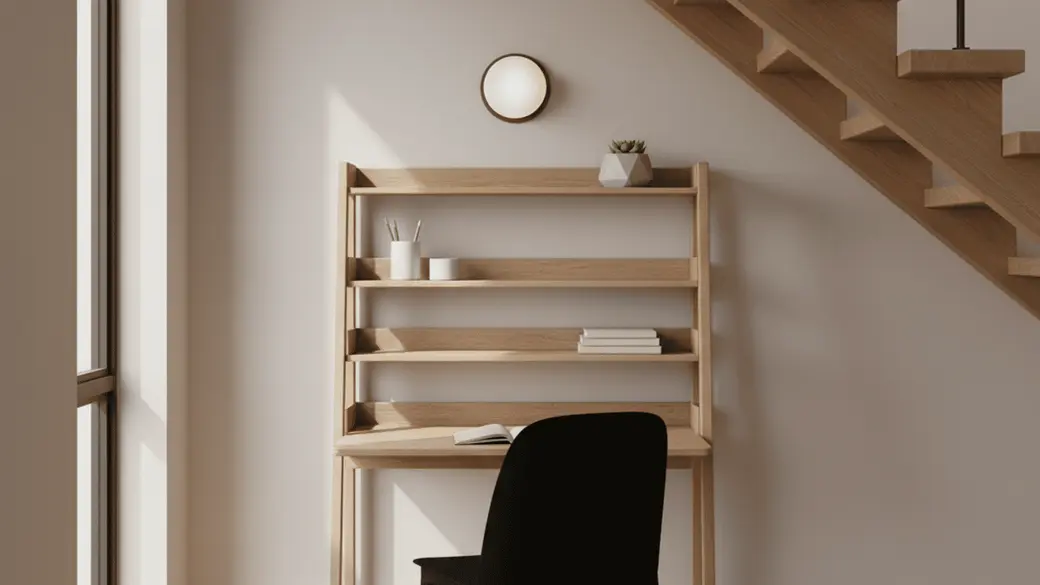
Before you buy a desk or start drilling holes, take a walk through your home with fresh eyes. We get so used to our furniture layout that we often miss the "dead space" right in front of us. As an agent, I tell buyers to look for areas that aren't pulling their weight. Wide hallways, the landing at the top of the stairs, or that weird wedge of space under a staircase are prime real estate. These spots are often just collecting dust or serving as a dumping ground for laundry baskets, but they are often perfect for a compact workstation.
Next, look for structural quirks like alcoves or recessed walls in your living room or primary bedroom. These architectural indentations are natural frames for a workspace because a desk tucked in there doesn't protrude into the flow of traffic. It feels intentional, rather than forced. Even if you don't have a built-in nook, you can create the "floating" potential. I often see great setups where a desk is positioned behind a floating sofa or even at the end of a kitchen island, turning a transition zone into a work zone.
However, before you commit to a corner, you have to check the vitals: power and light. You don't want to be running an extension cord across the main walkway—that is a tripping hazard and visual clutter. Also, assess the natural light. A window nearby can boost your mood, but direct glare on a monitor is a nightmare. Ideally, you want a spot near an outlet with controlled natural light.
The 'Cloffice': Converting a Closet into a Workspace
One of the most popular trends I see in renovations right now is the "cloffice." It sounds funny, but it is a serious solution for maximizing apartment storage and utility. Essentially, you are sacrificing a coat closet or a spare storage closet to gain an office that can literally "disappear" when you are done for the day.
The first step is usually addressing the doors. In a tight hallway, swinging doors eat up too much room. Many people simply remove them to open up the space, or if you want to hide the mess later, replace them with a heavy curtain or bi-fold doors that tuck away neatly. Once the barrier is gone, you have a blank canvas.
To make it work, you generally want to install a deep mounted desktop rather than shoving a freestanding desk inside. A mounted top ensures you have maximum legroom without table legs getting in the way. Use the vertical height of the closet for deep shelving above your head—this is perfect for archives, printer paper, or storage bins. Finally, since you are staring at a wall just a few feet away, give it some life. I love seeing peel-and-stick wallpaper on the back wall of a cloffice. It adds visual depth and makes the "room" feel distinct from the rest of the hallway.
Space-Saving Desk Styles for Tight Quarters
If you aren't building into a closet, your choice of furniture can make or break the room. When square footage is low, visual weight is everything. A heavy oak desk with drawers down to the floor will make a small room feel claustrophobic. You want pieces that feel light and airy.
Floating Desks These are my personal favorite for small rentals. Because they mount directly to the wall and have no legs, the floor remains visible underneath. Your brain reads the continuous floor space as "more room," making the area feel larger. Just make sure you hit the studs when installing!
Ladder Desks These lean against the wall and usually get narrower towards the top. They are fantastic because they offer built-in vertical shelving above your workspace without the bulk of a traditional hutch. They look more like a bookshelf than a workstation, which helps them blend into a living room decor.
Secretary Desks This is a classic design that has made a huge comeback. A secretary desk has a hinged surface that drops down for work and folds up to hide your laptop and papers when you're done. If you struggle with separating work life from home life, closing the lid on your stress at 5:00 PM is a great psychological trick.
Fold-Down (Murphy) Desks For the truly tight spots—like a narrow studio apartment—a wall-mounted fold-down desk is the ultimate space saver. It sits flush against the wall (often looking like a cabinet or chalkboard) when not in use and drops down only when you need it.
Smart Layouts for Shared Living Areas
Integrating an office into a shared living room or primary bedroom requires a bit of diplomacy and smart layout planning. You don't want your work stress radiating into your relaxation zones. One of the sleekest ways to handle this is the "behind the sofa" console trick. If your sofa floats in the middle of the room, place a slim console table or writing desk against its back. It acts as a sofa table when you aren't working, but gives you a dedicated spot to open a laptop without staring at a blank wall—you get to watch TV or look out the window instead.
In the bedroom, consider the nightstand swap. If you are tight on space, swap out a traditional bedside table for a small writing desk. It can hold a lamp and your phone at night, but serves as a quiet workspace during the day. It’s efficient, though it does require you to be disciplined about tidying up so you don't sleep next to a pile of unfinished paperwork.
You can also use furniture as room dividers. Open shelving units are great for this because they let light pass through while creating a physical barrier between the "office" and the "living" zone. To further define the space, use visual zoning. Placing a small, distinct rug under your desk and chair signals that this specific square footage has a different purpose than the rest of the room.
Go High: Vertical Storage and Organization Hacks
When you can't spread out, you have to go up. In every small home I tour, the ones that feel spacious are the ones that utilize wall height effectively. Floor-to-ceiling shelving draws the eye upward, maximizing the volume of the room and providing storage for items you don't use every day.
For the immediate desk area, consider a pegboard. They are incredibly trendy right now for a reason. A pegboard allows for flexible, modular storage. You can hang headphones, cables, scissors, and stationery cups exactly where you need them, keeping your actual desk surface clear for your computer. It’s also often renter-friendly if you use the right mounting strips or minimal screws.
Another overlooked trick is using wall-mounted pockets for paper management. Instead of a tray taking up valuable desk space, put your mail and active files on the wall. And for the tech-heavy workers, monitor arms are home office essentials. By lifting your screens off the desk, you reclaim the space underneath for your keyboard or notepad.
Lighting and Decor to Expand the Space
Lighting and decor aren't just fluff; they are tools to manipulate how big a space feels. If your office nook is in a dark corner, it will feel like a cave. I always recommend using mirrors in small offices. Hanging a mirror above or beside your desk reflects light and creates the illusion of depth, effectively "punching a hole" in the wall visually.
Stick to light, neutral colors for your desk and immediate surroundings. White, birch, or light gray furniture reflects light, whereas dark woods absorb it. If you need a chair in a tight living room, opt for a transparent acrylic ("ghost") chair or a wire-frame design. These allow the eye to travel right through them, reducing the visual bulk in the room.
Finally, save your floor space by skipping the floor lamp. Wall sconces—even the plug-in kind that don't require an electrician—or clip-on lamps are much better suited for space saving home office ideas. They provide the task lighting you need without occupying a single square inch of floor.
Prioritizing Ergonomics in Compact Setups
It is tempting to just grab a dining chair and get to work, but your back will hate you after a week. Just because the space is small doesn't mean you should ignore ergonomics. There are plenty of compact office chairs that offer lumbar support without looking like a massive corporate throne. Look for armless models or low-back options that can tuck completely under the desk when not in use.
If you are using a shallow desk (anything under 20 inches deep), you might find yourself sitting too close to your screen. A pull-out keyboard tray is a lifesaver here. It allows you to type at a comfortable distance while keeping the monitor further back. Speaking of monitors, ensure the top of your screen is at or slightly below eye level to prevent neck strain.
Lastly, think about stowable equipment. If you are using a laptop, get a stand that folds flat. Wireless mice and keyboards can be tucked into a drawer or a basket when the work day is done. The goal is to have a setup that supports your body while you work, but doesn't trip you up when you're done.
Frequently Asked Questions
How do you build a home office in a small apartment?
The best approach is to identify underutilized vertical space or transition zones, like hallways or corners. Use multi-functional furniture like a ladder desk or a drop-leaf table that serves other purposes when you aren't working, and utilize walls for storage to keep the floor plan open.
What is the minimum depth for a home office desk?
For a functional workspace where you use a laptop or a monitor, you ideally want a depth of at least 20 to 24 inches. If you go shallower than 18 inches, you will struggle to have enough room for a keyboard and a screen without sitting uncomfortably close to the display.
How can I hide my desk in the living room?
A secretary desk or an armoire desk is the most elegant solution, as they allow you to physically close the doors on your workspace. Alternatively, using a decorative room divider or placing the desk behind a floating sofa can obscure the view of office clutter from the main seating area.
Is a cloffice a good idea for productivity?
Yes, a cloffice can be excellent for productivity because it creates a dedicated, contained environment that separates "work" from "home." The ability to close the doors (or curtains) at the end of the day also helps mentally disconnect, which is crucial for preventing burnout in small spaces.
Categories
Recent Posts