City of Bend septic to sewer project: 2025 Guide
Moving from Septic to Sewer in Bend: Costs, Timelines, and What Homeowners Need to Know
If you own a home in Southeast Bend or one of the city’s older, established neighborhoods, the topic of sewer conversion has likely come up at the dinner table. For years, the City of Bend has been working to transition properties from private septic systems to the public sewer infrastructure. The goal is straightforward: protect our local groundwater and meet Department of Environmental Quality (DEQ) mandates.
However, the way this program works has shifted recently. It used to be a strict, top-down mandate based heavily on proximity. Today, the approach is more collaborative, operating largely through the Neighborhood Extension Project (NEP). This model relies on neighborhood petitions rather than immediate enforcement, giving residents a bit more say in the timing.
The division of labor is important to understand right off the bat. The City is responsible for constructing the main sewer line in the public right-of-way (the street). As a homeowner, your responsibility starts at the property line. You are responsible for installing the "lateral" connection that runs through your yard to the house, as well as properly decommissioning your old septic tank.
Current and Upcoming Sewer Projects (2025-2026)
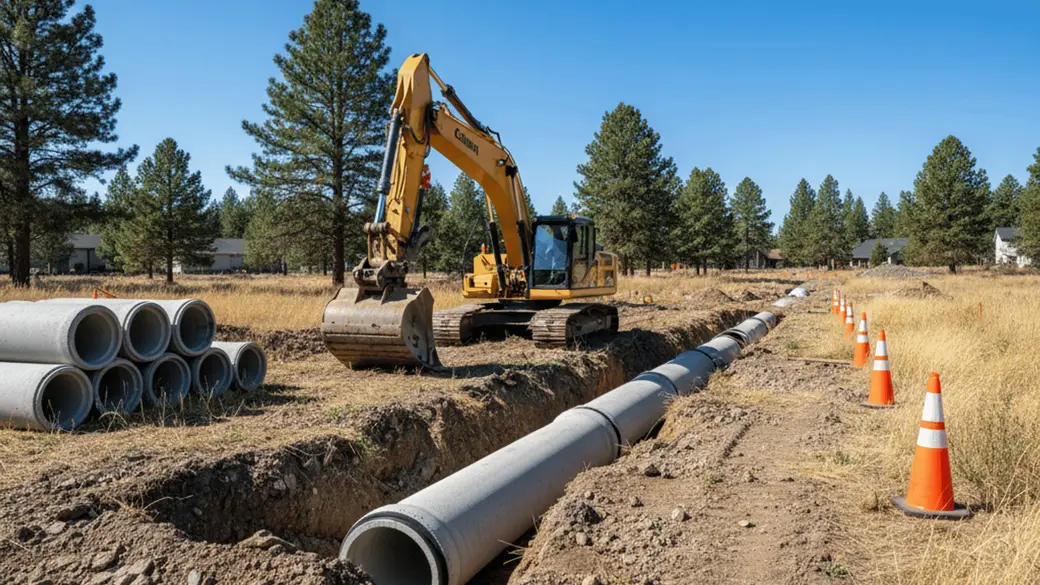
Keeping track of where the excavators are digging is the best way to know if your neighborhood is next. The city generally selects applications in October, moves into the design phase, and then begins construction. Once the design is approved, the actual physical work in the streets usually takes about 12 to 18 months.
Currently, we are seeing active or upcoming zones in areas like King Hezekiah, Fargo Lane #2, Pinehaven, and Woodhaven East. If you are in the Desert Woods area or near the Southeast Interceptor projects, you have likely already seen the heavy machinery.
The most critical milestone in this timeline is the "Notice of Operational Completion" (NOC). This is an official letter from the City stating that the main line in the street is live and ready for service. This letter triggers the clock for your connection timeline and specific financial incentives, so keep an eye on your mailbox if you know construction is finishing up on your street.
Cost Breakdown: Fees, SDCs, and Construction
Let’s be honest—this is the part everyone worries about. Converting to sewer is a significant investment. When you are looking at the total price tag, it helps to categorize the costs into two buckets: what you pay the City and what you pay a private contractor.
On the City side, you have the Connection Fee, which is essentially the cost to tap into the system the City just built. As of recent fee schedules, this is approximately $10,480, though it is subject to change annually (usually in July). Then there are System Development Charges (SDCs). Think of SDCs as a one-time "buy-in" fee for the overall capacity of the city’s water treatment infrastructure. These currently run approximately $6,025.
Then comes the private construction work. You will need to hire a contractor to trench your yard, lay the pipe, and decommission your old tank. In Bend, this cost varies wildly because of our geology. If your soil is sandy and the run to the street is short, it might be on the lower end around $5,000. However, if your property sits on a shelf of hard basalt rock—common in many parts of town—or requires a long trench, those costs can easily jump to $20,000 or more.
You also need to budget for permits. You will need a City plumbing permit for the new line and a Deschutes County permit to legally abandon the old tank.
The 2-Year Incentive: How to Save 50%
There is a significant financial upside if you move quickly. The City of Bend offers a robust incentive program to encourage homeowners to hook up to the system sooner rather than later.
If you connect your home to the sewer within two years of receiving that Notice of Operational Completion (NOC), the City will cut your Connection Fee by 50%. Based on current rates, that is a savings of roughly $5,200. It is important to note that this discount applies only to the Connection Fee; the SDCs generally are not discounted.
If you wait past that two-year window, you will be on the hook for the full connection fee. For many homeowners, that $5,000 difference is the deciding factor in hiring a contractor immediately versus waiting.
Financial Assistance and Loans
If paying these costs out of pocket isn't feasible, there are several local and regional options designed to help bridge the gap. You don't necessarily have to drain your savings account to get this done.
Craft3 is a non-profit lender that offers Clean Water Loans specifically for septic repair and sewer connection. They are a common go-to for Oregon homeowners facing these mandates. Additionally, the City of Bend sometimes offers financing options that allow you to pay the SDCs and connection fees over time rather than in a lump sum—it’s worth checking with the Utility Department for current availability.
For households with lower incomes, specifically those earning below 80% of the Area Median Income (AMI), there may be fee waivers available. Organizations like NeighborImpact can often help verify eligibility for these assistance programs.
Step-by-Step: Connecting and Decommissioning
Once you have decided to move forward (or the timeline forces your hand), the physical process involves a few specific hoops. It’s not as simple as just digging a hole.
- Wait for the NOC: You cannot legally connect until the City confirms the main line is operational.
- Hire a Pro: You will need a licensed contractor. This is usually an excavation company or a plumber with excavation capabilities.
- Pull Permits: Your contractor will handle the City plumbing permit. You or your contractor must also get a Tank Abandonment Permit from Deschutes County.
- Construction: The contractor digs the trench and lays your lateral line from the house to the street.
- Decommissioning: The old septic tank must be pumped out and then either filled with sand/gravel or crushed in place. Crucial detail: Do not cover the old tank until the County inspector has seen it.
- Final Inspections: The City inspects the new sewer connection, and the County inspects the decommissioned tank.
Generally, you do not need to dig up your old drainfield; it can usually be left intact in the yard.
Impact on Property Value and Resale
If you are thinking about selling a home in Bend, the status of your sewer connection is a major value driver. You will often see listings describe a property as "Sewer Available" versus "Connected."
"Sewer Available" means the line is in the street, but the house is still on septic. This puts the burden of cost and construction on the buyer, which can be a sticking point during negotiations. Many buyers, especially those relocating to Bend who aren't used to septic maintenance, prefer the "set it and forget it" nature of being fully connected.
Sellers are required to disclose the status of the septic system and any known pending assessments. If the NOC has been issued but the connection hasn't been made, savvy buyers will often ask for a credit to cover the upcoming construction costs. Being fully connected can often simplify the inspection process and strengthen your position regarding Bend real estate market values.
Frequently Asked Questions
Is connecting to the sewer mandatory in Bend?
While the program has shifted toward voluntary petitions (NEP), connection becomes mandatory in specific scenarios. If your property is part of a completed project area, you generally must connect eventually, often triggered by the sale of the home or septic failure.
What happens if my septic system fails?
If your septic system fails and a city sewer line is available nearby, you generally cannot repair the septic system. You will be required to connect to the city sewer immediately, regardless of where the neighborhood is in the petition process.
Can I build an ADU if I'm still on septic?
Typically, no. Adding an Accessory Dwelling Unit (ADU) increases the load on the property. The City generally requires the property to connect to the public sewer system as a condition of approving the ADU permits.
Does the City pay for the pipe on my property?
No. The City pays for and maintains the main line in the public street. The homeowner is fully responsible for the cost and maintenance of the lateral line running from the property line to the house.
What is the '300-foot rule'?
This is a regulation stating that if a public sewer line is within 300 feet of your property, you must connect to it if your existing septic system fails or requires major repairs. You typically cannot get a permit to repair a septic tank if sewer is accessible within that distance.
Categories
Recent Posts