Winter ready home features Bend – 2025 Guide
Winter-Ready Home Features in Bend: A Local’s Guide to the High Desert
Moving to Central Oregon often starts with a dream of champagne powder at Mt. Bachelor and sunny winter hikes along the Deschutes. But if you are looking into living in Bend Oregon, you need to look past the postcard views and inspect the bones of the house. Our climate is unique—technically a "high desert"—which brings a very specific set of challenges for homeowners.
We don't just get cold; we get massive temperature swings. It might be 20°F at night and 45°F during the day. That freeze-thaw cycle is tough on building materials. On the Westside, heavy pine tree cover can keep properties in the shade for months, turning driveway snow into solid ice, while homes on the sunny Eastside might see that same snow melt by noon.
Whether you are buying a new build or looking at renovations, understanding what makes a home "winter-ready" is the difference between enjoying the season and fighting it. Here is what you need to look for to keep utility bills down and comfort up.
The First Line of Defense: Roof and Attic Performance
When we talk about winter damage in Bend, we aren’t usually talking about a roof collapsing under snow; we are talking about ice dams. These are the villains of the Central Oregon winter.
An ice dam forms when your attic is too warm. Heat escapes from your living space, melts the snow on the roof deck, and that water runs down to the cold eaves where it refreezes. Over time, this creates a ridge of ice that traps water, forcing it back under your shingles and into your walls.
To prevent this, you need more than just a shovel; you need proper insulation and ventilation.
Insulation Standards If you are inspecting a home, ask about the R-value in the attic. Local building science experts generally recommend between R-38 and R-60 for our climate zone. The goal is to keep the roof deck cold so the snow stays frozen until it sublimates or melts naturally from the top down.
Ventilation Matters Insulation works in tandem with airflow. You want to see functioning soffit vents (under the eaves) and ridge vents (at the peak). This allows cold outside air to wash through the attic, carrying away any heat that leaks from the house.
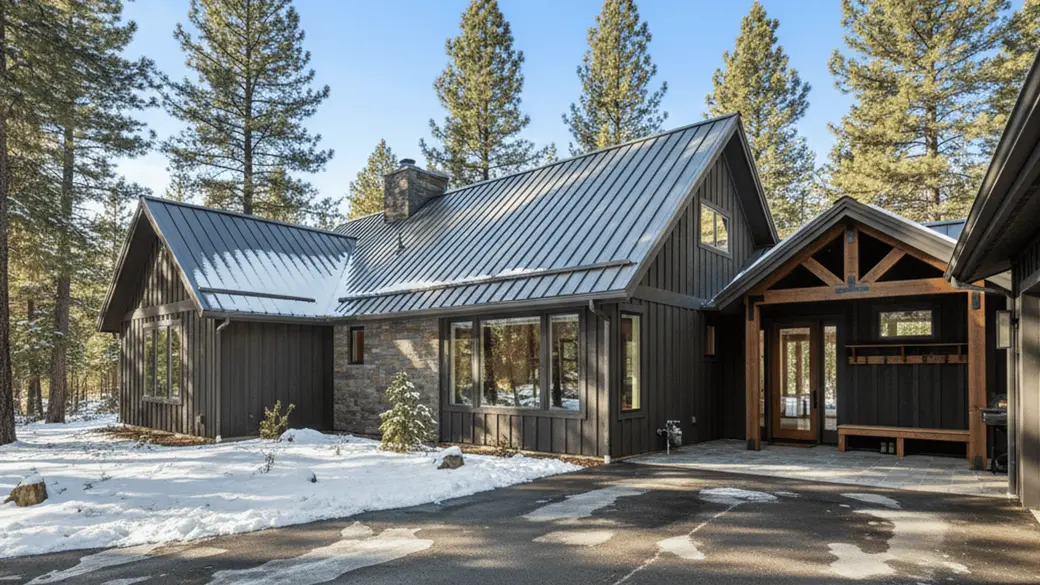
Snow Load and Pitch Structurally, roofs in Bend are built to handle significant weight. The standard code requirement is typically a minimum live load of 25 pounds per square foot (psf), though this number goes up as you get into higher elevations closer to the Cascades. You will also notice many custom homes utilize steeper roof pitches or metal roofing materials. These are excellent for shedding snow loads naturally, though you have to be careful where that snow lands—you don't want a metal roof dumping a ton of "roof avalanches" onto your deck or hot tub.
Heating Systems: The Heat Pump vs. Furnace Debate
If you ask five locals what the best heating system is, you might get five different answers, but the physics of our climate points to a clear winner.
Heat Pumps These are incredibly popular and efficient for a large chunk of the year. During our "shoulder seasons" (spring and fall) and mild winter days where temps hover between 35°F and 50°F, a heat pump is cheaper to run than a gas furnace. However, older heat pump models lose efficiency rapidly once the thermometer drops below freezing. If the home only has an older heat pump, you might find yourself relying on expensive "emergency heat" (electric resistance strips) during January cold snaps.
Gas Furnaces There is undeniable comfort in the "instant heat" of a natural gas furnace. When it is 10°F outside, a gas furnace pushes hot air immediately, whereas a heat pump tends to blow cooler, steady air.
The Hybrid Solution The gold standard for energy efficient homes in Bend is a "Dual Fuel" or hybrid system. This setup uses an electric heat pump for the mild days and automatically switches to a gas furnace when the outside temperature drops below a set point (usually around 30°F or 35°F). This gives you the lowest possible utility bills without sacrificing comfort during a deep freeze.
Backup Heat Sources Finally, don't underestimate the value of a gas fireplace insert or a certified wood stove. Power outages can happen during winter storms. having a heat source that works without electricity (or with a simple battery backup for the blower) ensures your pipes won't freeze if the grid goes down.
Passive Solar and Driveway Orientation
If you have ever spent a winter morning chipping two inches of ice off a driveway, you know why orientation matters. This is one of those details that doesn't show up on a spec sheet, but it changes your daily life.
The South-Facing Advantage A south-facing driveway is essentially nature's snow blower. Because Bend has so many sunny days even in winter, the intense high-desert sun hits south-facing concrete and melts snow rapidly. You might shovel once, and the sun dries the rest. Conversely, a north-facing driveway—or one heavily shaded by Ponderosa pines on the Westside—can develop a thick layer of ice that stays until March unless you are aggressive with removal.
Solar Gain Indoors That same solar principle applies to your windows. Homes designed with passive solar principles feature large south-facing windows to capture heat during the day. If the home has thermal mass features—like concrete floors or stone fireplaces situated in that sun path—the house will absorb that warmth and release it slowly after the sun goes down, naturally reducing your heating load.
Interior Must-Haves: Mudrooms and Radiant Floors
Winter in Bend is an active lifestyle, and your house needs to be able to handle the gear that comes with it.
The Functional Mudroom In many markets, a mudroom is just a cute entryway with a bench. Here, it is an airlock for moisture and grit. You want durable flooring like slate or tile that can handle melting snow and red volcanic dust. Hardwood in a high-traffic entry will get destroyed quickly. Look for built-in storage for bulky puffy coats and, ideally, a spot to dry out wet gloves and boots. If you are a skier, space to stash gear without dragging it through the living room is a huge plus.
Radiant Floor Heating While often sold as a luxury, heated floors feel like a necessity here, particularly in bathrooms and kitchens with tile work. Radiant heating is silent, efficient, and eliminates the shock of walking on ice-cold floors at 6 AM. It also helps dry out wet floors in entryways much faster than forced air can.
Smart Thermostats Because many residents travel or spend weekends at the mountain, smart thermostats are standard equipment. Being able to monitor your home’s temperature from your phone ensures you aren't heating an empty house, but more importantly, it alerts you if the temp drops dangerously low, helping you catch potential issues before pipes freeze.
Exterior Features and Winterization
The outside of your home takes a beating, so durability is key. When you are doing your final walk-through or winter home maintenance checklist, check the plumbing and drainage first.
Irrigation Protection Every home in Bend with an irrigation system needs a blowout valve. We don't just turn off the water; we have to purge the lines with compressed air every autumn. A system that is easy to access makes this yearly ritual much cheaper and faster.
Plumbing and Gutters Make sure all exterior hose bibs are "frost-free" models, which shut the water off deep inside the wall rather than at the spigot. Regarding gutters, you will see some homes without them. This is intentional in heavy snow areas to prevent ice from ripping them off the fascia. If the home does have gutters, they need to be heavy-duty steel or aluminum, ideally with robust hangers to support the weight of wet snow.
Heated Driveways While rare and expensive to install (and run), a heated driveway system is the ultimate luxury for steep driveways. It circulates warm fluid through tubing under the pavement, melting snow on contact. If you are looking at a luxury property on a steep grade, this feature is worth its weight in gold.
Common Questions About Winter Homes in Bend
What is the snow load requirement for roofs in Bend, Oregon?
Generally, the building code in Bend requires a minimum roof snow load of 25 pounds per square foot (psf). However, this requirement can increase significantly depending on your specific elevation and zone, so it is always smart to verify the engineering on custom homes or additions.
Is a heat pump enough for Bend Oregon winters?
For most days, yes, modern cold-climate heat pumps can handle the job. However, because efficiency drops in extreme cold, most locals prefer a system with a backup heating source—either a furnace (dual fuel) or heat strips—to maintain comfort during our occasional sub-zero snaps.
Do I really need a south-facing driveway in Bend?
You don't absolutely need one, but it will significantly reduce your winter maintenance. If you buy a home with a north-facing or shaded driveway, be prepared to be diligent about shoveling and potentially using traction grit or ice melt to keep it safe.
Categories
Recent Posts